

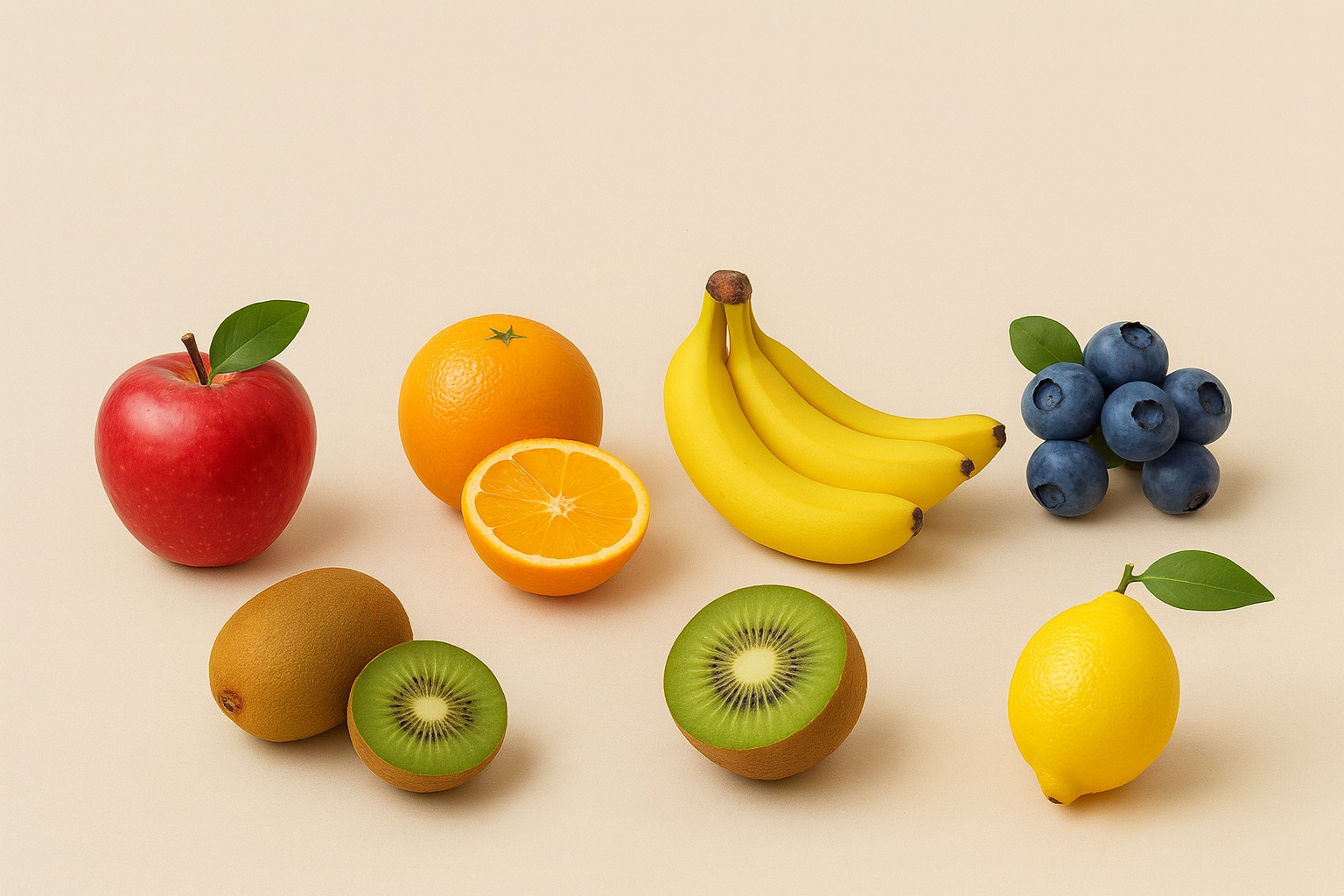



There's a reason "which fruits are healthy" keeps trending on search, because the answer keeps changing depending on who you ask.
One source says eat more fruit. Another says fruit has too much sugar. Wellness influencers are cutting it out entirely. Nutritionists say none of that is necessary. And somewhere in the middle, you're standing in the produce section trying to make a decent decision.
Here's what actually matters: not all fruits are equal. Some are naturally low in sugar, high in fiber, and genuinely useful for your metabolism, energy, weight goals, and skin. Others are sweetness-forward and worth moderating if you're watching your sugar intake.
This guide covers the six best low-sugar fruits worth adding to your routine, what they do for your body, what they do for your skin, and how to actually eat them day to day.
Quick Reference: Low-Sugar Fruits at a Glance
Do Fruits Raise Blood Sugar?
Yes, but not all of them, and not in the same way.
What actually determines a fruit's impact on your body is the glycemic index (GI) and glycemic load (GL), not just the sugar number on a label. A fruit can taste sweet and still have a low GI, meaning the sugar is released slowly and doesn't cause a spike. Fiber is the reason it slows down how quickly glucose enters your bloodstream.
This is also why whole fruit is almost always a better choice than fruit juice. Juicing removes most of the fiber and concentrates the sugar, turning what was a smart snack into something closer to a sugar hit. If you're serious about managing energy levels, weight, or skin clarity eat the fruit, don't drink it.
Must read: Intermittent Fasting for Women: Benefits, Hormonal Risks & Who Should Avoid It
The 6 Best Low-Sugar Fruits for Healthy Living
1. Avocado The One That's Almost Sugar-Free
Avocado is technically a fruit and arguably the most useful one on this list. It has virtually no sugar, almost no carbohydrates, and is loaded with monounsaturated fats that support everything from heart health to hormone balance.
The fiber content (around 10g per fruit) slows digestion, keeps you fuller for longer, and helps stabilize energy levels throughout the day. The healthy fats also help your body absorb fat-soluble vitamins A, D, E, and K, which most people aren't getting enough of.
For your skin: Avocado's fatty acids deeply moisturize from within. Vitamin E protects against oxidative damage, and the anti-inflammatory fats reduce the redness and irritation that show up when the body's stressed or inflamed.
2. Lemon and Lime Underrated and Incredibly Useful
Nobody thinks of lemons and limes as fruits to eat, but they absolutely count, and they're among the most functional options on this list. A squeeze of lemon in warm water first thing in the morning has become a mainstream wellness habit for good reason: it supports digestion, hydration, and liver function without adding any meaningful sugar to your day.
The flavonoids in citrus fruits have been studied for their role in reducing inflammation and supporting metabolic health. And the vitamin C content is significantly important for immunity, collagen production, and skin repair.
For your skin: Vitamin C is one of the most well-researched ingredients in skincare, and consuming it through food is one of the most efficient ways to get it to the skin. Lemons and limes support collagen synthesis, reduce dark spots over time, and protect against the oxidative stress that accelerates aging.
3. Strawberries The One That Tastes Like a Cheat But Isn't
Strawberries are one of those rare foods that feel indulgent but are genuinely doing something useful in your body. Their GI is well below 55, meaning they release energy slowly. They're also rich in anthocyanins, the compounds that give them their red color, which research links to reduced inflammation, improved insulin sensitivity, and better cardiovascular health.
They're high in fiber, rich in vitamin C, and contain manganese, which supports bone health and metabolism. As a breakfast fruit, a smoothie addition, or a dessert substitute, they're hard to beat.
For your skin: Anthocyanins fight the free radical damage that causes premature aging. Vitamin C supports collagen and helps even out skin tone. Strawberries are one of the best dietary sources of both.
Must read: Rosemary Oil vs Minoxidil: Can a Kitchen Ingredient Really Regrow Hair?
4. Watermelon Not What You Think
Watermelon has a high GI, which puts people off. But GI doesn't tell the whole story. Glycemic load, which accounts for how much sugar is actually in a realistic serving, is what matters in practice. Because watermelon is 92% water, a normal portion has a glycemic load of just 4–5, which is low. In real terms, you'd have to eat a significant amount for it to spike your blood sugar meaningfully.
It's also rich in lycopene (a powerful antioxidant), contains citrulline (linked to improved circulation), and is one of the best hydrating foods you can eat, which directly impacts how your skin looks and feels.
For your skin: Hydration is one of the most underrated contributors to skin quality. Watermelon hydrates from within, giving skin a plump, dewy appearance. Lycopene also provides some natural protection against UV-related skin damage.
5. Papaya The Digestive One
Papaya sits in the moderate GI range, but it has something most fruits don't: papain, a digestive enzyme that helps break down proteins and reduce gut inflammation. For anyone dealing with bloating, irregular digestion, or gut-related skin issues, papaya is worth paying attention to.
It's rich in vitamins A, C, and E, beta-carotene (which converts to vitamin A and supports eye health), and folate. It's also one of the few fruits with meaningful anti-inflammatory properties beyond just antioxidant content.
For your skin: Papain gently exfoliates dead skin cells from within the gut, reducing the buildup of toxins that contribute to dull skin and breakouts. Vitamins A and C support cell turnover and collagen synthesis, two things that keep skin looking fresh and even.
6. Guava: The Most Underrated Fruit on This List
If there's one fruit that consistently shows up on every credible low-GI list, it's guava. Its GI of around 12 is remarkably low, lower than almost any other fruit, meaning it has minimal impact on blood sugar regardless of how much you eat. It contains four times more vitamin C than an orange, is high in dietary fiber, rich in potassium, and has been used in traditional medicine across Southeast Asia for generations for its role in supporting metabolic and digestive health.
Recent research has also looked at guava leaf extract for its potential role in blood sugar regulation, a reminder that the whole plant often carries more benefit than just the fruit itself.
For your skin: The vitamin C levels alone make guava exceptional for skin. Add in the antioxidant lycopene, anti-inflammatory compounds, and high fiber content that supports gut health, and you have a fruit that works on skin from multiple angles at once.
Must read: Shikakai Benefits for Hair: Uses & How to Apply with Amla and Reetha
The Diet-Skin Connection: What's Actually Happening
This connection is one of the most searched wellness topics right now, and the science is catching up to what people already sense intuitively: what you eat shows up on your skin.
- Glycation is one of the clearest examples. When excess sugar circulates in the bloodstream, sugar molecules attach to collagen and elastin fibres, the proteins that keep skin firm and elastic. The result is stiffened, damaged fibres that show up as dullness, sagging, and premature lines. Reducing sugar intake, including from high-GI fruits, directly slows this process.
- Gut health and skin clarity are the other major pieces. Research increasingly supports the gut-skin axis, the idea that inflammation in the gut shows up as inflammation on the skin. High-fiber, low-sugar fruits feed the good bacteria in your gut, reduce inflammatory signalling, and contribute to a clearer, more balanced complexion over time.
- Oxidative stress from pollution, UV exposure, stress, and poor diet damages skin cells and accelerates aging. The antioxidants in low-sugar fruits (particularly vitamin C, lycopene, and anthocyanins) neutralize this damage at the cellular level.
Practical Tips: How to Actually Eat These
Getting the benefits from these fruits doesn't require a meal plan overhaul. A few simple habits cover most of it:
Start the morning with warm lemon water before eating anything else; it supports digestion and hydration without any sugar load. Eat whole fruits rather than juicing them; the fiber is what makes the difference. Pair fruit with a protein or fat source (a handful of nuts, some yogurt) to slow glucose absorption further. Use strawberries or guava as a dessert substitute instead of reaching for processed snacks. Make a fruit-infused water with strawberries, lime, and watermelon for hydration that actually tastes like something.
When Diet Isn't Enough, What UNCOVER Can Do
At UNCOVER Clinics, we treat the skin concerns that food and lifestyle habits alone can't fully fix. Here's what we commonly address for people who are already doing the right things internally:
- Dull or uneven skin tone - Laser Toning and HydraFacial restore brightness and clarity that diet supports but can't always deliver on its own.
- Pigmentation and dark spots - UnTint Pigmentation Peel and CO2 Laser Treatment target stubborn hyperpigmentation at the source.
- Early aging, fine lines, and skin laxity - GFC Face (UnWrinkle), Skin Boosters, and Forma RF Skin Tightening rebuild collagen from within the skin, the same collagen your diet is working to protect.
- Acne and post-acne scarring - Advanced Microneedling and Anti Scar Peel address the structural damage that breakouts leave behind.
- Dehydrated or stressed skin - Glow Drips (IV Infusion) delivers vitamins and antioxidants directly into the bloodstream, bypassing the gut entirely for faster, more targeted skin nourishment.
Good food builds the foundation. The right treatment takes it the rest of the way.
Must read: Oranges For Weight Loss: A Smart Way To Fitness
The Bottom Line
Managing your sugar intake doesn't mean avoiding fruit. It means understanding which fruits support your health goals and which ones are better moderated.
Avocado, guava, strawberries, lemon, papaya, and watermelon are among the best choices available, low in sugar, low on the glycemic index, and high in the nutrients your body and skin actually need.
Food is one of the most powerful and underused tools for how your body feels and how your skin looks. These six fruits are a practical, enjoyable starting point.
If you're already noticing the diet-skin connection in the form of dullness, uneven tone, persistent breakouts, or early signs of aging, that's worth addressing with more than just dietary changes.


.webp)