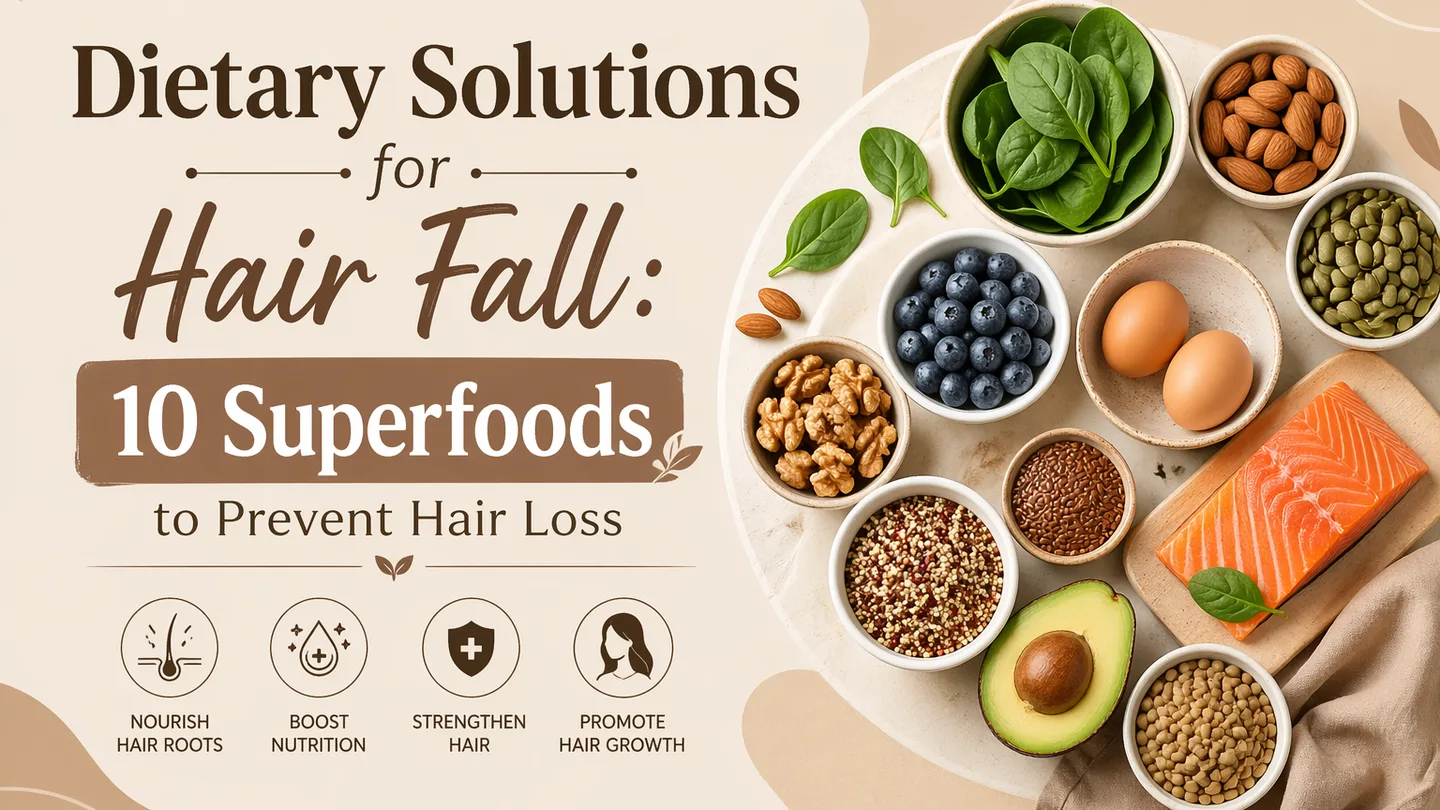
Hair fall has multiple causes, such as stress, hormones, genetics, scalp conditions, but one of the most overlooked and most fixable is diet. What you eat directly determines the quality, strength, and growth rate of your hair. Your hair follicles are among the most metabolically active cells in the body, and they need a consistent supply of protein, iron, biotin, zinc, and vitamins to stay in the active growth phase. When your diet falls short, shedding increases by 3–6 months after the nutritional gap begins.
Quick Reference - 10 Superfoods for Hair Fall Control
Superfood | Key Nutrients | Hair Benefit | How to Use |
Eggs | Protein, biotin, zinc, B12 | Builds keratin, prevents thinning | Daily boiled, scrambled, in curries |
Spinach (Palak) | Iron, folate, vitamins A & C | Oxygenates follicles, reduces shedding | Dal, smoothies, palak paneer |
Amla | Vitamin C, antioxidants | Strengthens follicles, boosts iron absorption | Fresh juice daily or raw amla |
Lentils (Dal) | Protein, iron, zinc, biotin | Prevents breakage, supports the growth cycle | Twice daily across varieties |
Nuts and Seeds | Vitamin E, zinc, omega-3, and biotin | Repairs tissue, regulates DHT | Handful daily as a snack |
Fatty Fish | Omega-3, vitamin D, protein | Reduces scalp inflammation, regulates the follicle cycle | 2–3 times per week |
Sweet Potatoes | Beta-carotene (vitamin A), vitamin C | Hydrates scalp, promotes sebum | 3–4 times per week |
Greek Yogurt / Paneer | Protein, calcium, zinc, riboflavin | Strengthens hair shaft | One serving at each meal |
Fenugreek (Methi) | Protein, nicotinic acid | Stimulates follicles, reduces shedding | Paste on scalp + in food weekly |
Curry Leaves | Beta-carotene, amino acids, antioxidants | Supports new growth, reduces greying | Daily tadka |
Why Does Diet Affect Hair Fall?
Hair is made almost entirely of keratin, a structural protein. To produce keratin consistently, the body needs amino acids, iron for oxygen delivery to follicles, zinc for cell repair, biotin for keratin synthesis, and vitamins A, C, D, and E for scalp health and follicle protection.
When you are deficient in key nutrients, the anagen (growth) phase shortens. Your hair spends less time growing and more time in the telogen (resting) phase. What appears as sudden hair loss is typically a nutritional deficiency that began three to six months earlier.
A blood test for hair loss, covering ferritin, zinc, vitamin D, B12, and CBC, is the fastest way to identify whether your diet is the root cause of your hair fall.
10 Superfoods to Prevent Hair Loss
1. Eggs: Protein and Biotin in One
Eggs are the most complete hair growth food available. They contain high-quality protein providing all essential amino acids needed for keratin production, biotin (vitamin B7) which directly supports hair shaft strength, zinc, and vitamin B12. Eggs support the body's ability to grow hair and prevent hair thinning. Eat them boiled, scrambled, or in curries, daily if possible.
Key nutrients: Protein, biotin, zinc, vitamin B12
2. Spinach (Palak): Iron and Vitamin A
Spinach is a powerhouse of iron, folate, and vitamins A and C, all vital for scalp health and hair growth. Iron deficiency often leads to hair fall, and incorporating spinach into meals can help restore hair strength and vitality. Iron carries oxygen to your hair follicles; without it, follicles weaken and shed faster. Blend into smoothies, add to dal, or make palak paneer.
Key nutrients: Iron, folate, vitamins A and C
3. Amla (Indian Gooseberry): Vitamin C Powerhouse
Amla has been a cornerstone of Ayurvedic hair care for centuries. It is rich in vitamin C and antioxidants that enhance collagen production, strengthen hair follicles, and prevent premature greying. Vitamin C also dramatically improves iron absorption from plant-based foods a critical benefit for vegetarians. Drink fresh amla juice in the morning or consume raw amla daily.
Key nutrients: Vitamin C, antioxidants, collagen precursors
4. Lentils and Dal: Complete Protein for Follicles
Dal provides protein, iron, zinc, and biotin, all essential nutrients for hair growth. Lentils are among the most practical and affordable hair fall control foods in the Indian diet. Eaten twice daily across different varieties, masoor, moong, urad, and chana, they provide a consistent supply of amino acids that directly prevent hair shaft breakage.
Key nutrients: Protein, iron, zinc, biotin, folate
5. Nuts and Seeds: Zinc, Vitamin E, and Omega-3
Almonds are rich in vitamin E, which helps repair and build hair tissue. Walnuts contain omega-3s, while pecans provide zinc, all of which promote scalp and hair health. Pumpkin seeds are particularly potent for zinc, which regulates DHT and supports follicle repair. A handful of mixed nuts and seeds daily is one of the simplest additions to a hair fall control diet.
Key nutrients: Vitamin E, zinc, omega-3 fatty acids, biotin
6. Fatty Fish: Omega-3 and Vitamin D
A diet built around eggs, salmon or sardines a few times a week, lentils for iron and zinc, leafy greens, and nuts covers nearly every nutrient linked to hair health. Omega-3 fatty acids reduce scalp inflammation and nourish follicles. Vitamin D directly regulates the hair follicle cycle; low levels are strongly linked to thinning hair and alopecia.
Key nutrients: Omega-3 fatty acids, vitamin D, protein
7. Sweet Potatoes: Beta-Carotene for Scalp Health
Sweet potatoes are one of the richest sources of beta-carotene, which the body converts into vitamin A. Beta-carotene promotes scalp health and sebum production, keeping hair hydrated and less prone to breakage. Replace regular potatoes with sweet potatoes 3–4 times a week.
Key nutrients: Beta-carotene (vitamin A), vitamin C
8. Greek Yogurt and Paneer: Protein and Calcium
Greek yogurt packs 20 grams of protein into a typical serving and also includes zinc, a mineral linked to hair growth, and riboflavin, another key vitamin for cell growth. Including dairy at each meal ensures a consistent protein supply across the day.
Key nutrients: Protein, calcium, zinc, riboflavin
9. Fenugreek Seeds (Methi): Follicle Stimulation
Fenugreek seeds contain protein and nicotinic acid, which help hair regrowth. Soak 3–4 tablespoons overnight, grind into a paste, and apply to the scalp for 45 minutes twice a week. Methi can also be consumed daily, sprouted in salads, in paranthas, or added to dal.
Key nutrients: Protein, nicotinic acid, hormone precursors
10. Curry Leaves: Beta-Carotene and Amino Acids
Curry leaves are packed with beta-carotene and amino acids, both of which support new hair growth and reduce hair thinning. They are also rich in antioxidants that help restore pigment and prevent greying. Add generously to your tadka every day.
Key nutrients: Beta-carotene, amino acids, antioxidants
Foods to Avoid for Hair Fall Control
Sugar, fried foods, refined carbohydrates, processed foods, and alcohol accelerate hair fall by spiking inflammation and depleting nutrients. Excess caffeine also dehydrates the scalp and interferes with iron absorption. Replace these with whole grains, protein-rich foods, and leafy vegetables.
Nutrient Deficiency vs Hair Loss: Quick Diagnosis Table
Deficiency | Hair Symptom | Best Food Fix |
Iron | Diffuse shedding, fatigue | Spinach, lentils, amla (for absorption) |
Protein | Thinning, breakage, slow growth | Eggs, dal, paneer, fish |
Biotin (B7) | Brittle hair, thinning | Eggs, nuts, sunflower seeds |
Zinc | Shedding, scalp inflammation | Pumpkin seeds, lentils, nuts |
Vitamin D | Hair thinning, alopecia patterns | Fatty fish, sunlight, eggs |
Vitamin B12 | Dull, slow-growing hair | Eggs, dairy, fish |
Vitamin C | Weak follicles, poor iron absorption | Amla, citrus fruits, bell peppers |
Omega-3 | Dry scalp, brittle strands | Walnuts, flaxseeds, fatty fish |
When Diet Is Not Enough: Uncover Clinics
Dietary improvements reduce hair fall caused by nutritional deficiencies — but they do not treat androgenetic alopecia, alopecia areata, telogen effluvium from hormonal causes, or advanced hair thinning where follicles need clinical stimulation.
At Uncover Clinics, hair fall is assessed and treated as a medical concern. Services include scalp and hair analysis, PRP therapy, GFC hair treatment, and dermatologist-led hair fall protocols covering minoxidil, nutritional supplementation, and anti-DHT therapy.
Fix your diet first. Uncover's treatments restore what deficiency and genetics have already taken.

Medical Disclaimer: This content is for informational purposes only and does not constitute medical advice. Always consult a qualified dermatologist for diagnosis and treatment. Individual results may vary.
You May Also Like
Hair transplant success rate — what realistic means
FUE survival rates are 90–95% at reputable clinics. What matters more is density, hairline design, and 5-year durability. Here's the honest breakdown.
Hair transplant recovery — a day-by-day timeline
Recovery after FUE is faster than most patients expect. Here's what to actually expect, day by day, through the awkward 'ugly duckling' phase and out the other side.
Best oil for hair growth — honest take
Castor, coconut, rosemary, onion — most claims don't hold up under actual evidence. One oil has real clinical backing. Here's the sorted list.