Header image: Hair Loss & Thinning
Revitalize Your Hair, Reclaim Your Confidence

Hair Fall & Hair Loss Treatment — Dermatologist-Led Care

Dermatologist-led hair fall and hair loss treatment at Uncover. GFC, PRP, QR678, mesotherapy, and FUE hair transplant. 15+ specialists, 8 clinics across Delhi, Gurgaon, Noida.

AI Skin Analysis

Your hair loss & thinning plan, decoded by AI.

Every hair loss & thinning consultation at Uncover begins with an AI skin analysis that maps your unique profile — pigmentation, pores, texture, hydration, pollution damage — before your dermatologist builds a hair loss & thinning plan based on real data, not guesswork.

  • Pigmentation mapped per zone
  • Pores & texture baselined
  • Hydration index per area
  • Pollution damage scored
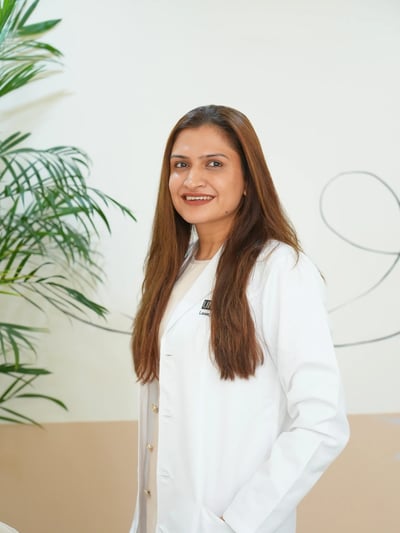
Medically reviewed by Dr. Isha Narang · Senior Consultant Dermatologist & Hair Transplant Surgeon

Understanding Hair Loss and Thinning

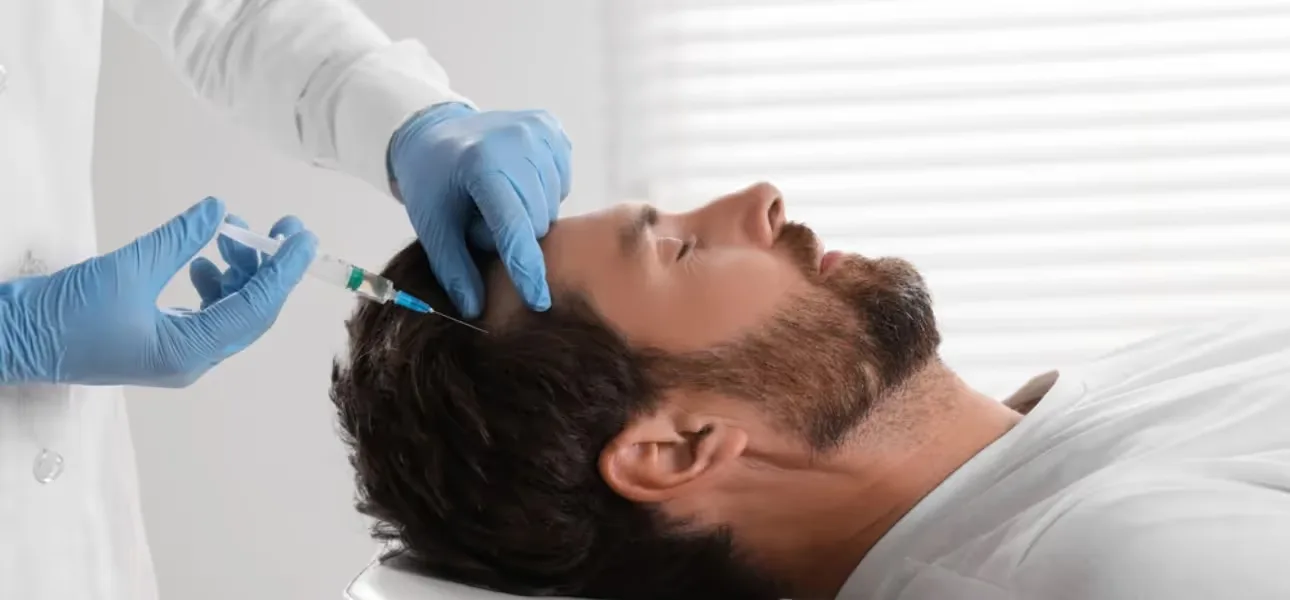
Hair loss consultation

Hair loss and thinning are common issues affecting both men and women, characterised by a noticeable decrease in hair density and volume. This can lead to bald patches, a receding hairline, or a general thinning of hair all over the scalp.

Hair loss and thinning can result from a variety of factors, including genetics, hormonal imbalances, stress, poor nutrition, medical conditions, and certain medications. Environmental factors and lifestyle choices - such as excessive styling or chemical treatments - can also contribute to weakened hair follicles and hair loss.

Common Causes of Hair Loss

Advanced technology for hair loss treatment
  • Genetics - Androgenetic alopecia (pattern baldness) runs in families
  • Hormonal changes - Pregnancy, menopause, thyroid disorders, PCOS
  • Stress - Chronic stress triggers telogen effluvium
  • Nutritional deficiencies - Iron, vitamin D, B12, protein deficiency
  • Medical conditions - Autoimmune diseases, scalp infections
  • Chemical damage - Excessive heat, colouring, straightening

Advanced GFC Therapy, HydraFacial Keravive, and FUE Boost Technology

Hair loss solutions

At UNCOVER Clinic, we offer a range of cutting-edge treatments to address hair loss and thinning, tailored to your specific needs:

Hair Loss Treatment for Women — PCOS, Postpartum, Female Pattern

Most women who walk into our clinic for hair fall are dealing with one of three things: postpartum telogen effluvium, PCOS-driven thinning, or female pattern hair loss. They look similar in the shower drain but they need different plans.

Postpartum hair fall

The big shed 3–6 months after delivery is hormonal and self-limiting — hair returns to baseline over 6–12 months on its own. What we add is acceleration: GFC or PRP to kickstart the anagen phase, nutritional support for iron and ferritin, and HydraFacial Keravive scalp therapy. Most postpartum patients get back to pre-pregnancy density 3–6 months faster with treatment than without.

PCOS hair loss

Elevated androgens miniaturise scalp follicles on the crown and temples. Plan: endocrinologist evaluation first, then spironolactone or combined oral contraceptive if prescribed, plus GFC or PRP for the scalp, plus topical minoxidil. Maintenance is lifetime because the hormonal driver doesn't go away.

Female pattern hair loss

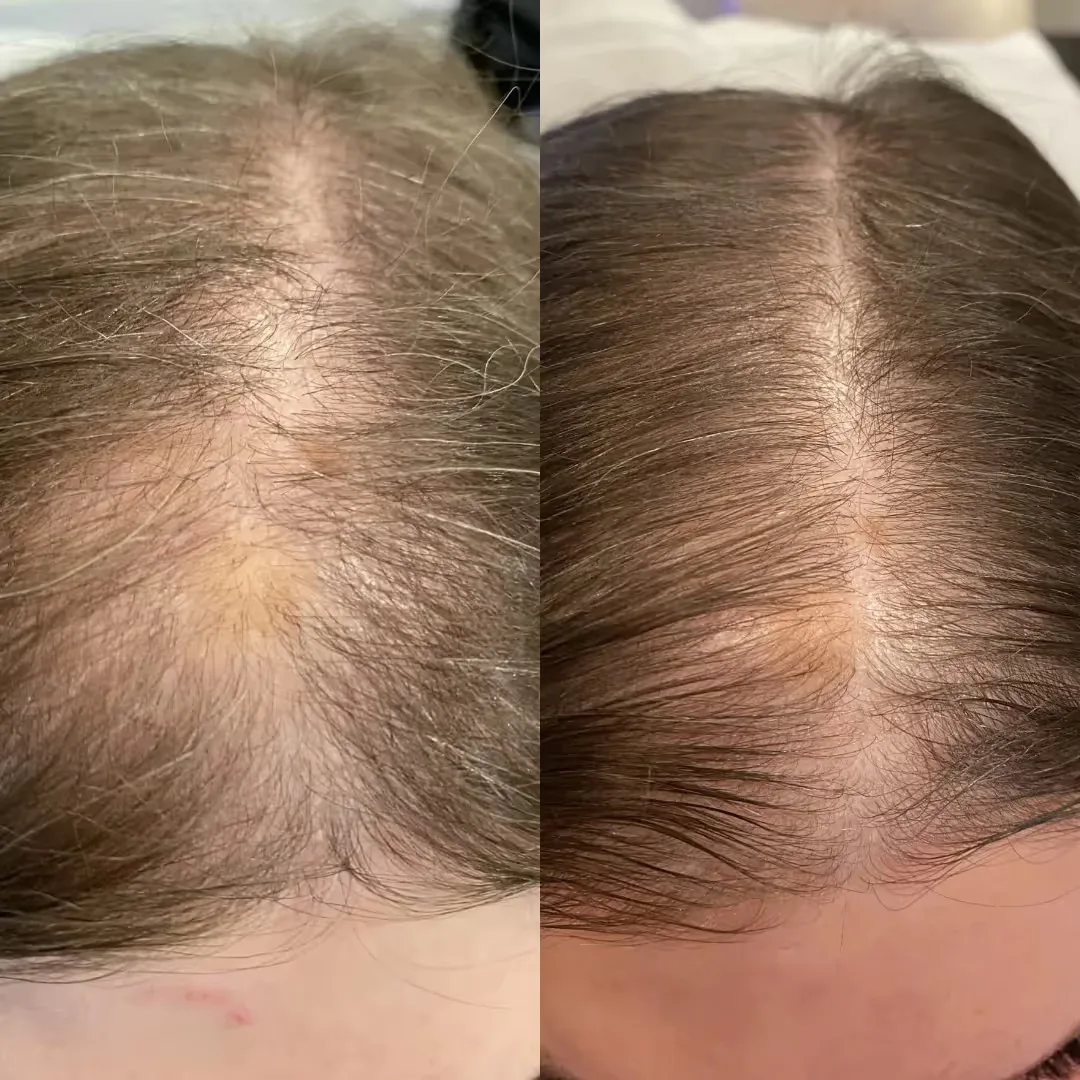
Widening part line, visible scalp through the crown, thinning without bald patches. Responds well to GFC or PRP every 3–4 weeks for the loading phase, followed by maintenance every 3–4 months. Minoxidil topical daily. Spironolactone if indicated.

Hair Loss Treatment for Men — Norwood Scale, Regrowth, Transplant

Male pattern hair loss follows the Norwood scale. Different stages need different interventions — and the earlier you start, the more options you have.

Norwood 1–2 (early)

Receding hairline or diffuse thinning. Best addressed with topical minoxidil, GFC or PRP loading, and finasteride if prescribed. At this stage medical therapy often delays the progression by decades.

Norwood 3–4 (moderate)

Frontal recession plus some crown thinning. Medical therapy still works but you may also be a candidate for FUE transplant depending on donor density. Your dermatologist will assess both options.

Norwood 5+ (advanced)

Established baldness. Medical therapy alone won't give cosmetic density. FUE hair transplant is the main option, combined with medical therapy on remaining hair to prevent further loss.

PRP vs GFC for Hair — Which Is Right for You?

Both use your own blood. PRP is platelet-rich plasma — one centrifuge spin, contains platelets plus growth factors plus some residual cells. GFC is Growth Factor Concentrate — double-processed to isolate a pure, clear concentrate of growth factors.

In practice: GFC tends to be more comfortable, clearer in appearance, and produces faster visible regrowth — most patients see results by session 3 versus session 4–5 on PRP. GFC is typically 20–40% more expensive per session.

Which to pick: early-stage thinning often does well on either. Established thinning or less-responsive cases — we lean GFC. Post-partum — either works, the key is starting before the bald patches entrench.

GFC at Uncover starts from ₹5,399 per session. Most plans are 4–6 sessions in the loading phase, then maintenance every 3–4 months.

Frequently Asked Questions

How to stop hair fall immediately?

Short-term: address reversible triggers — iron and vitamin D deficiency, recent illness, crash diets, stress, tight hairstyles. Medium-term: start a dermatologist-supervised plan (GFC, PRP, topical minoxidil, or medical shampoos). There is no single overnight fix — but the right combined protocol can slow active fall within 4–8 weeks.

What is the difference between PRP and GFC for hair?

Both use your own blood. PRP is processed once and contains platelets plus growth factors. GFC (Growth Factor Concentrate) is processed twice — the second step isolates only the concentrated growth factors, without red blood cells or other components. GFC tends to be cleaner, more comfortable, and typically produces faster, more consistent results in our experience. Your dermatologist will choose based on your hair loss stage.

How much does hair fall treatment cost in Delhi?

GFC starts from ₹5,399 per session (4–6 sessions needed). PRP is similar. QR678 is ₹8,000–₹12,000 per session. FUE hair transplants start from ₹85,000 + GST. Pricing varies by graft count and scalp area — your dermatologist will give you an itemised plan.

Is female hair loss treatable?

Yes. Female pattern hair loss, postpartum hair fall, PCOS-driven thinning, and traction alopecia all respond to a dermatologist-supervised plan. The earlier we start, the better the result — so get evaluated the moment you notice more hair on the pillow or in the shower drain.

How do I know if I need a hair transplant?

Not every hair loss case needs a transplant. Transplants are indicated when follicles in the affected area have miniaturised beyond medical rescue — typically Norwood 3+ for men, or defined receding hairlines. We'll do a medical evaluation and only recommend a transplant if non-surgical options (GFC, PRP, medical therapy) won't deliver the density you want.

Can postpartum hair loss be reversed?

Yes — postpartum hair fall is self-limiting for most women and resolves 6–12 months after birth. We can accelerate the return to baseline with GFC, nutritional supplementation, and HydraFacial Keravive scalp therapy.

Is hair regrowth treatment permanent?

Results are maintained as long as you maintain the protocol. After the loading phase (4–6 sessions of GFC/PRP), we typically move to a maintenance schedule of one session every 3–4 months plus topical therapy. Transplanted hair from a FUE procedure is permanent by nature.

Why should I choose Uncover for hair loss treatment?

Every plan at Uncover is dermatologist-led, not technician-led. Every consultation starts with an AI scalp analysis — not a visual guess. And every protocol is structured, reviewed, and adjusted across follow-ups, backed by 15+ specialists across 8 clinics in Delhi NCR.

Ready to address your concerns?

Book a consultation with our expert dermatologists today.

Book FREE Appointment
Call to Book Book FREE Appointment